
Essentials of Planning, Monitoring, Accountability and Learning for Humanitarian Practitioners
500,00 €
Overview
|
!! Due to personal reasons, the course will only start on 25 February !! Join our course on Planning, Monitoring, Accountability & Learning in Humanitarian Action. This compact training is designed for humanitarian practitioners who want to strengthen their practical monitoring skills. After a brief introduction to essential planning concepts, the course focuses on how monitoring can be effectively implemented within humanitarian projects. In addition, participants will gain insights into accountability mechanisms and how monitoring results can support project steering. You will work hands-on with developing indicators and designing data collection tools. Moreover, you will gain practical experience using KoboToolbox for digital data collection and PSPP for data analysis. We will explore how monitoring data can be used to improve reporting and support adaptive project management. The course will take place online on: February 25, 2026, March 11, 2026, March 25, 2026, from 9:30 a.m. to 1:30 p.m., and a fourth date that is still to be determined within the participants’ group. Further information on the content can be found below under “Downloads.” This training is part of our Certificate of Advanced Studies program and can be credited with one ECTS. Find more information about the program here (Click). |
You will learn
- How to understand the concept of Theory of Change
- How to develop meaningful, measurable indicators aligned with project objectives
- How to design and prepare questionnaires as key data collection tools for monitoring
- How to analyze and interpret quantitative data to inform decision-making and reporting.
- Understand the Most Significant Change (MSC) method and its use in capturing qualitative outcomes.
- To explore the use of artificial intelligence in MEAL processes, including potential benefits and challenges.
Downloads
Lecturers
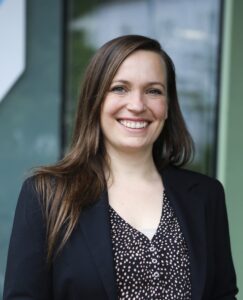
Susanne von Jan
| Susanne von Jan is a communication scientist with a focus on empirical social research and over 17 years of professional experience in planning, monitoring, evaluation, accountability, and learning. She founded smep-consult in 2019, advising NGOs, foundations, and implementing organizations, and conducting external evaluations. Susanne has delivered the MEAL in Humanitarian Action course three times in collaboration with VENRO, the German association for development policy and humanitarian aid. She is also a board member of DeGEval and previously served for eight years as spokesperson for the Working Group on Development Policy and Humanitarian Aid. Her work is guided by the principles of participation, practical usefulness, and scientific rigor.
|
Provider

Advice & contact